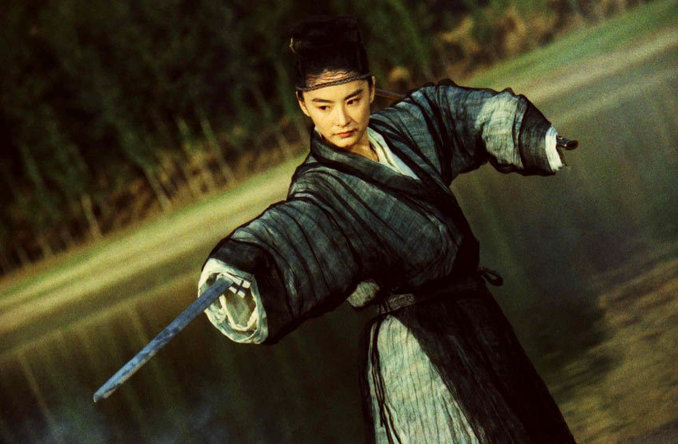
Ashes of Time (Film)
Overview
Ashes of Time is a 1994 Hong Kong film directed by Wong Kar-wai, featuring an ensemble cast that includes Leslie Cheung, Maggie Cheung, and Brigitte Lin. The film is a loose adaptation of Louis Cha's novel The Legend of the Condor Heroes and stands out for its non-linear narrative and philosophical exploration of human emotions, desires, and memories. Set in a stylized version of ancient China, the movie blends elements of wuxia (martial arts) with art-house aesthetics, making it a unique entry in the genre.
Plot Summary
The film centers around the character Ouyang Feng, portrayed by Leslie Cheung, a disillusioned and cynical swordsman who lives in the desert. He operates as a middleman, hiring skilled swordsmen for various tasks. Throughout the movie, Ouyang Feng reflects on his past loves and the choices he made, which leads to encounters with other characters who share their own stories of love and loss. The narrative is fragmented and cyclical, with each character's tale contributing to the overarching themes of regret, love, and the passage of time.
Characters
Ouyang Feng (Leslie Cheung): The protagonist, a solitary and introspective swordsman who grapples with memories of his past love and the emotional void they left behind.
The Woman in White (Brigitte Lin): A mysterious and ethereal presence who impacts Ouyang Feng’s life significantly, embodying themes of unfulfilled love.
The Blind Swordsman (Tony Leung Chiu-wai): A tragic figure whose story of lost love and eventual blindness adds depth to the film’s exploration of human frailty.
Huang Yaoshi (Tony Leung Ka-fai): A friend of Ouyang Feng’s, whose own romantic entanglements and philosophical musings mirror the central themes of the film.
Cinematography and Style
Wong Kar-wai's direction is marked by his signature style, with Christopher Doyle's cinematography bringing a dreamlike quality to the film. The use of color, slow motion, and unconventional editing techniques enhances the narrative's fragmented nature, emphasizing the characters' emotional landscapes. The film's visual style is both poetic and evocative, drawing viewers into a world where time and memory intertwine.
Themes
Ashes of Time delves into the complexities of human emotions and relationships, focusing on themes such as love, betrayal, and loneliness. The film portrays its characters as haunted by their pasts, unable to escape the emotional baggage that shapes their present actions. It also contemplates the nature of memory and time, suggesting that both are mutable and subjective, much like the film's non-linear narrative.
Reception and Legacy
Upon its release in 1997, Ashes of Time received mixed reviews due to its unconventional storytelling and departure from traditional wuxia films. However, it has since been reevaluated and is considered a significant work in Wong Kar-wai's filmography as well as in the wuxia genre. Its artistic approach and thematic depth have garnered a cult following and critical acclaim over time. The film's re-release as "Ashes of Time Redux" in 2008 introduced it to a new generation of audiences, further solidifying its status as a cinematic masterpiece Article reference1. 40 best Chinese films in past four decades (1989-1998). chinadaily.com.cn. 2018Photo Gallery(2 pictures)CategoriesArtsTagFilm and TVCatalogue1. Overview2. Plot Summary3. Characters4. Cinematography and Style5. Themes6. Reception and Legacy- - - []








